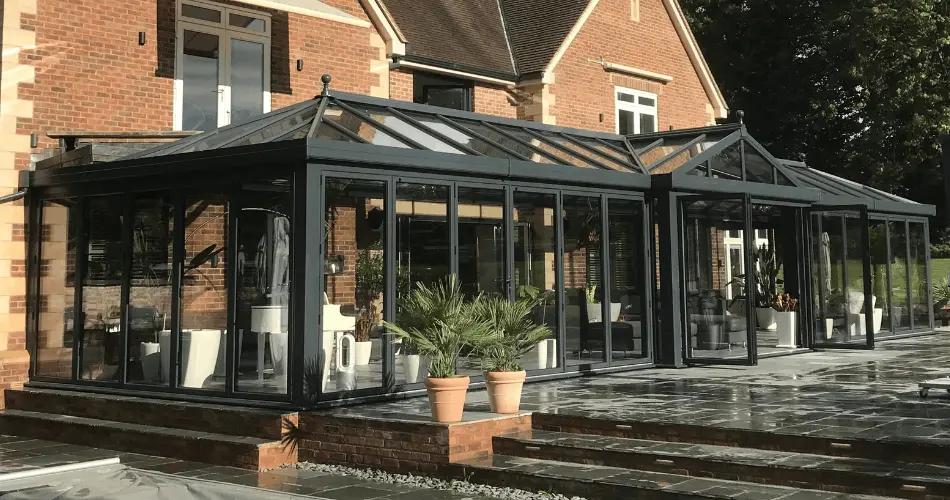
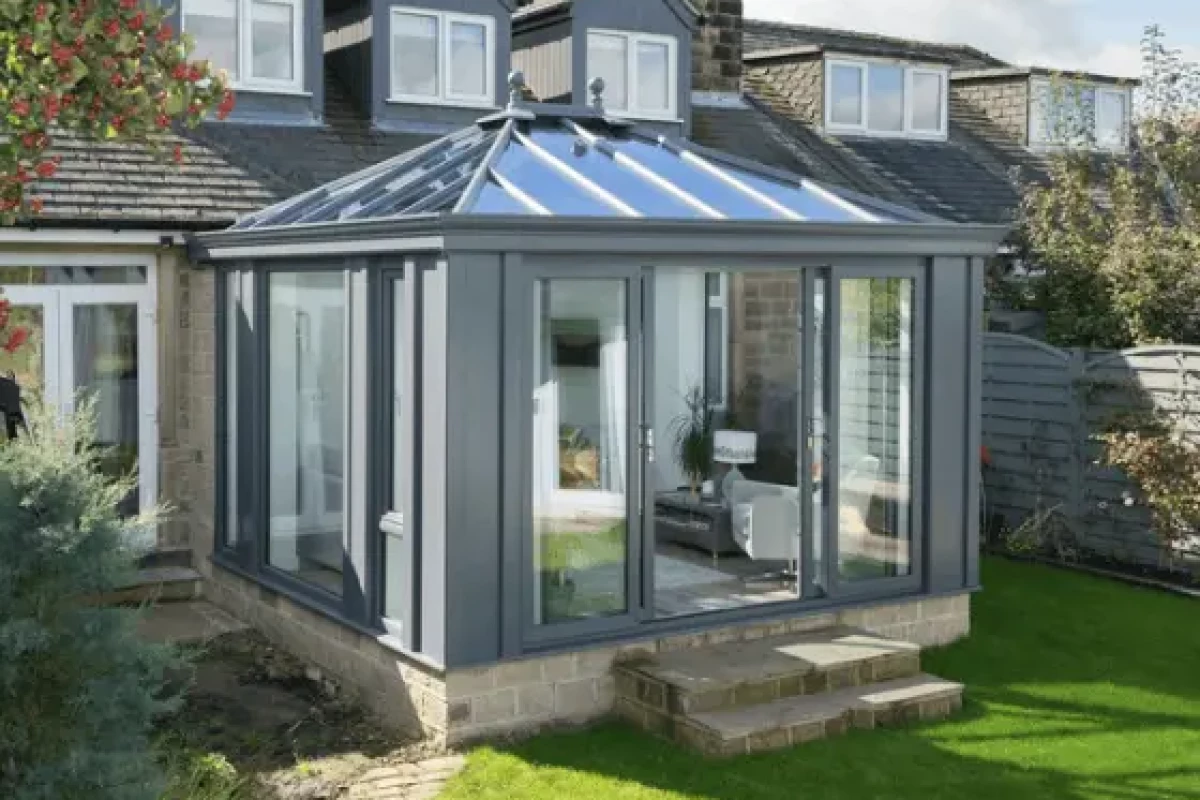
The main types of conservatory are lean to, Victorian, Edwardian, Georgian and gable end, plus P shaped, T shaped and bespoke designs. Each suits a different home, so the right choice depends on your property, your garden and how you want to use the room.
Every Ultraframe conservatory is made to measure, so you can choose the style and shape that fits your home and still get a room you can use all year.
Type |
Shape |
Suits |
|---|---|---|
|
Rectangular, leaning against the house |
Most homes, including smaller gardens |
|
|
Faceted front with a rounded look |
Period and traditional homes |
|
|
Rectangular, roof sloping from each edge |
Homes that suit a classic, balanced look |
|
|
Rectangular, roof sloping from each edge |
Homes that suit a classic, balanced look |
|
|
Upright, pointed front |
Homes that want extra height and light |
|
|
Two areas combined |
Larger gardens and multi-use rooms |
|
|
Two areas combined |
Larger gardens and multi-use rooms |
|
|
Designed around your home |
Homes with unusual layouts |
These are some of the most popular conservatory styles:
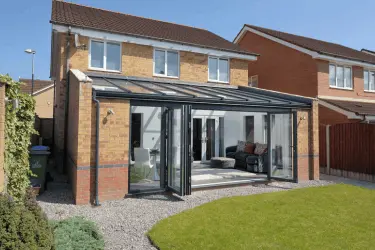
A lean to conservatory has a rectangular shape that leans against your home, usually with a sloping roof. It is simple, flexible and suits both traditional and modern homes.
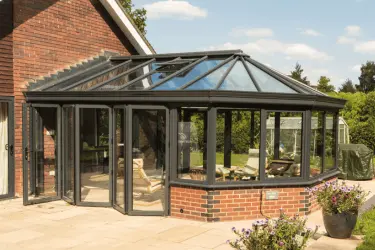
A Victorian conservatory has a faceted front, a rounded appearance and an ornate roof. It is a classic choice for period homes.
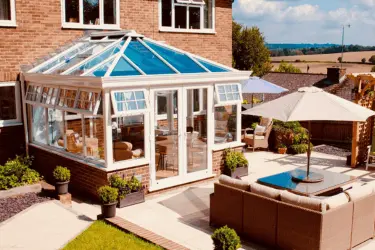
Edwardian conservatories, also known as Georgian conservatories, have a rectangular shape with a roof that slopes from each edge. This gives the room a sense of grandeur.
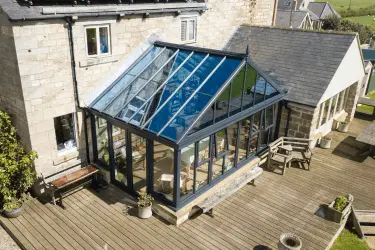
A gable end conservatory has an upright, triangular front that adds height and light.
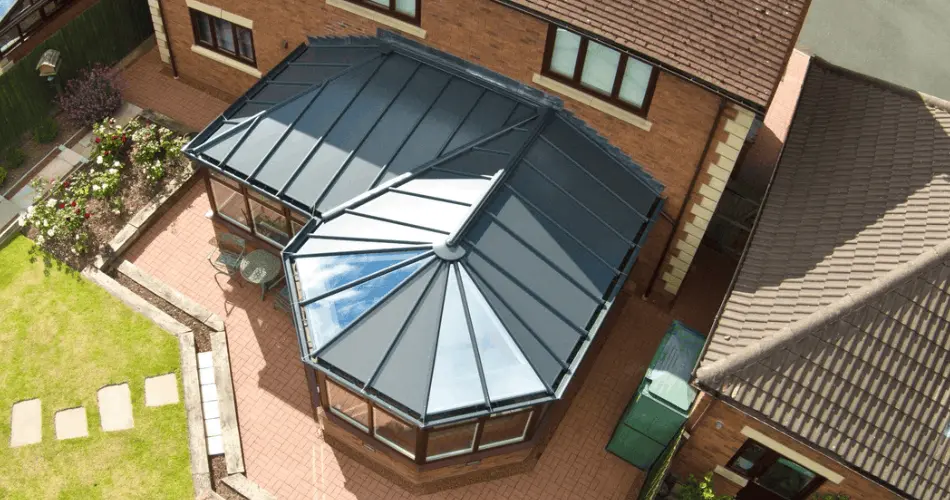
Shape describes the footprint of the room. The right shape depends on how much space you have and what you want to do with it.

P shaped and T shaped conservatories combine two areas in one room. That can give you a living space and a dining space together.
Explore P Shaped Conservatories|Explore T Shaped Conservatories

If your home does not suit a standard shape, Ultraframe designs are fully bespoke and can work with any property type.
The type of home you have can determine the type of conservatory that is most suitable. Explore our guides to conservatories for bungalows, conservatories for small homes, loggia conservatories and sunrooms, each showing how an Ultraframe roof can create a beautiful, light-filled space that stays comfortable all year round.
If your garden slopes or you’re weighing up foundation options, our guide to conservatory bases and sloped gardens explains how you can create the perfect foundation for your new conservatory.
Start with your home. A period property often suits a Victorian or Edwardian style, while a lean to works well on most modern homes.
Then think about space and use. If you want more than one area, such as a lounge and a dining space, a P shaped or T shaped design can fit better. Finally, think about the roof. Ultraframe offers glass, tiled and hybrid roofs, so the look and the comfort of the room are set by your choices, not by the type.
Style is the look of the roof and front, such as Victorian or Edwardian. Shape is the footprint of the room, such as lean to, P shaped or T shaped.
An orangery has a solid flat roof with one or more glazed lantern roofs. A conservatory roof is pitched and can be glazed with glass, solid panels or a tiled roof. The roof is the feature that sets them apart.
A lean to is a simple rectangular shape that leans against the house, so it is a common choice where space is limited. Small homes have their own guide.
A local Ultra Installer can talk you through the options for your home, from design to price.
Compare roof styles, finishes and see how Ultraframe’s market-leading roofing systems create a light, beautiful room you can enjoy in comfort all year round.
DOWNLOAD BROCHURENot registered?
Update Cookie Preferences